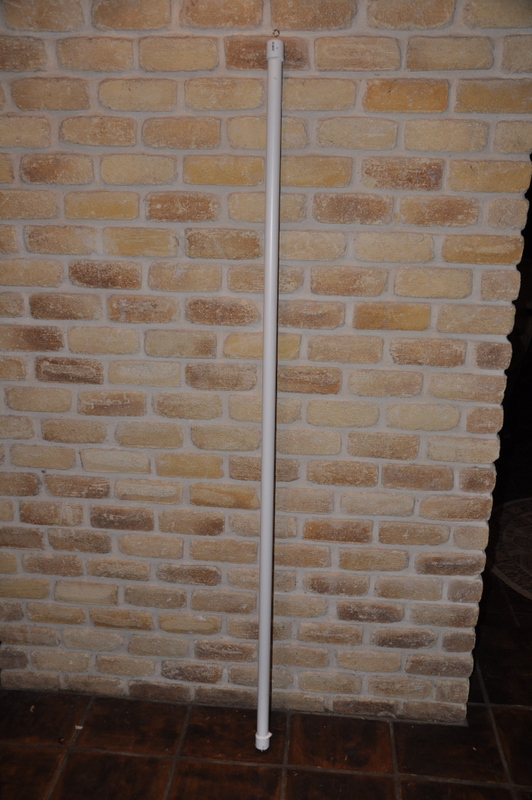
W2IK’s “IK-STIC 2”
DESIGNED BY BOB HEJL – W2IK
(PUBLISHED IN AUGUST 2004)
The “IK-STIC 2” is a vertical, all band, antenna that is over 25 feet tall yet weighs under 5 pounds !Using a tuner it can easily cover the amateur radio HF bands from 40 – 10 Meters. No unsightly wires as the radiating wire is inside the telescoping mast!
TO CONSTRUCT THIS ANTENNA YOU NEED:
ONE SD-20 Telescoping mast (WorldRadio sells these)
ONE 6 foot section of 1 1/2 inch PVC Pipe
50 feet of 20 or 22 gauge STRANDED, INSULATED Wire
ONE SO-239 Barrel Connector with washers and Nuts
ONE male and female push on connectors (see photos)
TWO Large (6 inch) Hose clamps (see photos)
Electrical Tape, Epoxy, Duct tape and asst. hardware.

ANTENNA CONSTRUCTION

FITTING THE INTERNAL ANTENNA WIRE INSIDE THE TELESCOPING MAST:
Take the SD-20 telescoping mast and remove the bottom cap by unscrewing it.Looking in you will see the sections nestled in place. Remove the rubber plugfrom the next to thinnest section so now all the sections are “open”. Carefullytake a 21 foot piece of 20 gauge, stranded, insulated wire and tie a very smallknot at the end. Take the knotted end and insert it into the smallest section ofthe telescoping mast and using a straight wire made from a coat hanger, shovethe stranded wire into the section as far as it can go. Then take a small amountof epoxy and glue the wire into place so it can’t be removed from the top section.SLOWLY telescope out the entire mast, making sure that the wire slides insideeasily. When the mast is fully extended you will have almost 20 feet of wireinside. Leave about 5 inches after the mast is fully extended and cut the wire.This will leave a 5 inch “play” to connect the wire at the bottom. NowCAREFULLY drill a small hole in the rubber base of the mast pointing outSIDEWAYS. Epoxy a push on connector into the hole. Solder another 4 inchpiece of that same stranded wire onto the connector on the INSIDE. On thebottom cap of the mast, drill a hole that will allow you to half way insert, andtightly secure, that SO-239 barrel connector. Carefully epoxy it on the inside ofthe cap so it won’t loosen. Next, solder the long wire that is in the mast onto theinner part of the SO-239 connector. Solder the wire from the push on terminal tothe outer section of the SO-239 connector. Take the cap and give it about 7 COUNTER CLOCK WISE turns so the two wires are twisted. This way, when youscrew the cap on, the wires will untwist in the mast. Tighten the end cap, but donot glue it.

WINDING THE PVC COIL SECTION:
Next take 25 feet of that same stranded wire and start to wrap it around the 11/2″ PVC pipe at a point 14 inches from one end. (This becomes the top end.) MAKE SURE YOU LEAVE 8 inches of “free wire” before you start the coil wrap.Slowly wind the wire around the PVC pipe creating a coil, leaving a spacing of 11/2 – 2 inches from each turn. As you wind it down the pipe, you may wish tosecure it every so often with electrical tape. The winding does not have to be exact, but keep it as evenly spaced as you can. One foot before the bottom,create a tight wrap of the wire, leaving no gaps on the turns. At the end, tape thewire to the PVC pipe. When you are done, wrap the entire coil in electrical tape so the coil stays in place. On the top end, solder a mating end of a push onconnector so it can plug into the mast’s side connector.
Wrap several turns of Duct Tape to the very top of the PVC mast. This will serveto offset the taper in the telescoping mast when it gets mounted to the PVC pipe. Using two adjustable hose clamps, carefully mount the very bottom of thetelescoping mast to the top one foot of the PVC pipe. DO NOT OVER TIGHTEN. It takes very little compression to keep the mast in place. When you have done this, you can extend the mast out it’s entire 20 foot length. To keep the entire antenna up-right, slip it over a 4 foot section of appropriate thin wall steel tubing that has been pounded in the ground about one foot. The lower coiled section of the antenna on the PVC pipe will then be slightly “ground coupled”. This helps with the antenna’s operation on 30 and 40 meters. Plug in the lower coil (The PVC pipe) into the male connector on the side of the telescoping mast. The SO-239 connector is where you screw in your coax cable to your radio. Make a few windings of whatever coax you are using at the connector point and tape them tightly together to prevent RF from returning on the coax shield. Connect the other end of the cable to your tuner and you are all set to go !!.
IMPORTANT: When you attach your coax to the antenna, make sure that the cable is dressed away and at as close to a right angle from the coil base for at least 5 feet and NOT down along it’s windings. Doing this will help prevent RF emitted from the coil from being radiated back on the coax shield and also will prevent “RF bites” at your radio point….ouch! The pictures are merely for display and do not indicate the coax properly run.This step is very important in it’s proper operation. Keep the coax away from the coil assembly!
To dis-assemble the antenna, just remove the coax, loosen the hose clamps and take down the mast after unplugging the PVC coil plug. CAREFULLY retract the mast and the internal wire should slowly coil down into the masting. DO NOT FORCE THE SECTIONS. A few gentle jiggles and a twist or two will do the trick. After several uses it will be easier to retract the sections as the internal wire will have “memorized” how to coil up. You can even store the telescoping mast in the PVC pipe by making a small slot at the bottom of the PVC tube toaccommodate the connector that is on the side of the telescoping mast . Theantenna is very simple, light and works well when tuned properly. My first contact was on 15 meters when I spoke to Siberia. I have used it on all the bands it covers and have also made an adapter so it mounts on the ball hitch of my truck. This is great when you are parked and can’t make a hole in the ground. (NOTE: If you wish to make an “IK-STIC 2” that covers 160-10 meters with a tuner, use a 7 FOOT PVC PIPE instead of the 6 ft. PVC and coil 35 feet of wire around it using 1 inch spacing between wraps and two feet near the end increase the spacing until you run out of the wire and the end of the coil wrap is four – sixinches from the bottom of the PVC pipe. Any longer coil winding that this willmake it difficult to tune the antenna on 10 meters.) (Use the rest of the antennabuilding dimensions as outlined above.)
A SPECIAL NOTE: IF YOU ARE HAVING PROBLEMS WITH THIS ANTENNAIT CAN USUALLY BE TRACED TO THE FACT THAT WHEN YOU BUILT IT,YOUR INTERNAL WIRES TO THE CONNECTOR WERE EITHER NOT FULLY UNTWISTED OR YOU ALLOWED TOO MANY TURNS SO IT UNTWISTEDTHEN TWISTED BACK. MAKE SURE YOU DO AN ACCURATE COUNT SOTHE TWO WIRES ARE NOT TWISTED IF NOT THE WIRES WILL BECOUPLED AND THE ANTENNA WILL NOT WORK PROPERLY.
AN ADDITIONAL QUICKIE MODIFICATION:
Epoxy two 1 1/4 inch thin wall PVC sleeves to the lower section of the telescoping mast so they will prevent the telescoping mast from beingcrushed by “over exuberant” tightening of the two hose clamps that hold the telescoping section to the other (coil) section.
REMEMBER…. it’s called the “IK-STIC 2”
Designed by Bob Hejl – W2IK
This antenna has been used at Field Day operations, SpecialEvents Stations, JOTA Events and County Activations with greatresults.


 N5NTG |
 08 30th, 2016|
 Everybody is likely familiar with the American Diabetes Tour de Cure bicycle rides. San Antonio held theirs last May and Austin will holding their 2-day event in September. There are also rides held in Corpus Christi (April) and a new one being held in Laredo later this year that could use some ham help in the future.


 I know more help is really needed for the two upcoming bike rides on September 21st and October 12-13th. I’m pretty sure that all of the other events will be grateful for some extra ham help as well.
 A small section from our 200 page “JUMP TEAM BOOT CAMP” training manual