Field Day is coming up soon, on June 25-26th, so here are a few thoughts (and facts) as you plan your group’s operation.
A FEW TIPS FOR ANY FIELD DAY OPERATION – I’ve posted some of this before but I think they should be repeated. (I’ve updated them a bit for 2016)
1. When setting up antennas within close proximity: If you are using wire antennas such as dipoles, and they run parallel to each other there will be interference on your HF operating bands in the form of hash so arrange them at right angles to each other and at slightly different heights.
If you use wire antennas such as dipoles, try to stay away from trap dipoles and use full length antennas instead. You may also wish to run your dipoles in different configurations such as have one as an “inverted V” and another as a sloper, etc. An antenna cut to the exact band you are using will decrease interference to and from other bands.
Do not compromise by using trap or “all band” antennas. (The only efficient “all band antennas” are a log periodic and a “fan dipole” NOT a “folded dipole” or others that claim they use “balancing resistors” as this only wastes RF energy in the form of heat.) With others you may make a few contacts, but they are junk and will cause harmonic radiation. Do not fall for any ads claiming “miracle antennas”.
Don’t waste your watts! Dedicated operating needs the right antenna. Wasted energy on trap antennas (some of your RF energy is used up in the form of heat) and that equals an inefficient radiator, especially as you go lower in frequency. On HF, try not to use vertical antennas as they receive too much man-made noise from sources such as generators, street lamps, etc.
Using a Yagi style antenna for Field Day may look impressive, but be careful that the “focused energy” doesn’t interfere with other operations. Know as well, that transmitting focused energy may be all well and good, but it, in receiving signals it can also make your station “deaf” from directions so you may have to waste time turning the beam…. is it worth it? —– READ ON, THERE’S LOTS MORE INFO! —-
2. When NOT to use a tuner! Tuners are great and some people use them all the time. (This includes any rig’s “built in tuner” or any “out board tuner”) HOWEVER, you need to concern yourself with something called “insertion loss”. Every time you use a tuner, there is a power loss due to heat of matching an antenna system to a rig.
READ THIS TWICE: If the antenna system is measured at an SWR (standing wave ratio) of 1:1.5 or less before using a tuner you do not need to use a tuner to do a perfect match as the insertion loss of using the tuner will be off set by any matching it does. Power (ERP) will be lost in the form of heat within the tuner. If you don’t believe me, do a test, using a good field strength meter at a distance of several wavelengths away from the antenna and you will see that what I’m saying is correct.
Tuners do not work miracles, so don’t expect them to. Using a tuner for NVIS is another story as it is an emergency “compromise antenna”.
Using a tuner to compensate for an antenna that is way “out of whack” should tell you to use a better antenna (or FIX it), matched by it’s length, for whatever band you wish to operate. If you use a tuner to match, say a 20 meter signal to work with a 15 meter antenna, it will also create harmonic distortion on the other bands! Don’t interfere with other operations at your site by doing this.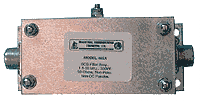
3. When operating within a tight area, as required by FD rules, it also pays to use “band pass filters” such as those manufactured by ICE. I have a full set of these HF filters and they work great. They are only about $38 per band and drastically reduce interference from your other operating posts. Make sure they are grounded as seen by the grounding lug on the top of the photo.
If your pocketbook can’t afford them, use coax “stub” filters. The lengths of these and how to build them can be found at: http://www.k1ttt.net/technote/k2trstub.html They are simple to make and easy to use. Both systems have been used by the major DXpeditions all over the world with great success. On HF frequencies make sure each operating station is properly grounded.
Do NOT use a common ground for all your operating posts. If you do, you will get “ground loops” with energy going where you don’t want it, including in to computer logging systems and the possibility of RF burns by operators or anyone touching the equipment.
4. Make sure that each operating position has a laminated chart of frequencies that can be used under your station’s or club’s operating license. Watch out and don’t operate too close to the band edges. (and remember: no one “owns” a frequency)
5. If using computer logging, always have paper logs and scratch pads ready to use in case your computers bog down or crash. (Ever use a “dupe sheet”? Don’t know what it is? Find out and use it!) Paper logs as a backup to computer logging also makes sure you get the info (exchange) right…. in some cases (mainly contesting), having the wrong info may get your operation penalized points or even disqualified.
6. Whenever I operate either in contests or operating events, I find it advantageous to camp out (remain on) a frequency rather than tune around (hunt and pounce). Remember that propagation conditions will change so stick with it even if you think the band has died or other stations appear on your frequency that weren’t there earlier. That’s just how propagation works. Save “hunting and pouncing” for near the end of the event when you wish to eek out those few last stations. Remember: When you move frequency, someone may take your camping out frequency and you won’t get it back!
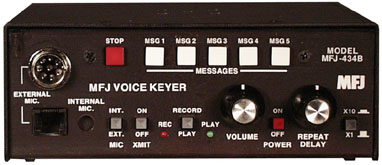
7. Keep your calling frequency active by calling CQ often. Don’t wait! Leave a gap of only four (4) seconds between calls or stations tuning by will miss your call and other stations  wishing to camp out may take over your frequency. In events such as FD, it also pays to use an automatic voice unit such as MFJ 434B “voice keyer”. (Cost is about $170.)
If you can’t obtain one, use a cheap electronic memo reminder and just play back your pre-recorded CQ while holding it close to your microphone but not so close as to induce audio distortion. (Editor – Your smartphone might have a way to record and quickly replay an audio recording as well.)
This form of “acoustic coupling” is an inexpensive way to save your voice. I have used both methods over the years with success. Keep your calls “short and sweet” using ITU phonetics ONLY. Don’t use any “cutesy” phonetics. BEFORE FIELD DAY…. REPLACE ALL BATTERIES IN VOICE AND CW KEYERS, ANTENNA ANALYZERS, DIGITAL CLOCKS, FLASH LIGHTS AND ANY OTHER UNITS THAT USE BATTERIES!
8. If you are lucky enough to cause a “pile up” (several stations calling you at once) answer the easiest one to hear first. If you can’t make out complete callsigns, ask for the station with the easiest partial call to reply. The others will wait. Do not get flustered. If you do, simply state “QRX”. (This means you are requesting those stations to pause, usually so your station can change operators, go flip to another blank log sheet, etc.) This will give you a few seconds to re-focus your thoughts. It is at this time where it also pays to have another person with you to help sort out any call signs or help with logging.
9. Ignore jammers. Do NOT bother answering them.
10. Have your station’s callsign and exchange info posted in large letters at your operating position in case you get a bit tired or flustered so you won’t forget and announce your own call by mistake. Make up some large signs to indicate what band / mode each station is operating on, to avoid having more than one station on the same band / mode at the same time (rules violation).
11. If possible, bring your own headphones to make your life easier and to cut down on ambient noise from your area and helps you to concentrate. An “odd ball” pair of headphones can actually put stress on you if they don’t fit properly.
12. Talk in a loud, clear voice, just like you were talking with a child and want to put a point across. No need to shout as it distorts your signal and makes it splatter to adjacent frequencies. Speak in to the microphone at an angle. Female operator’s voices tend to attract more contacts for some reason as well. Other stations might accuse you of “switch and bait” if you use the recording from a female operator, but answer with a male’s voice.
13. Pace yourself, drink plenty of fluids and let whomever is in charge know when you need a break. Do NOT be a “mic hog” as other people may wish to gain the experience of operating. Hopefully there will be plenty of ops around which will allow you the chance to rest a spell.
14. Learn a bit about propagation characteristics for each band time of day before you come to FD. With sunspots on the raise, the higher bands will be a bit more active than in pervious years, unless there is a solar flare or other disturbance.
As a rule: Use higher HF frequencies during the day, when the sun is doing it’s job with the ionosphere, and use lower frequencies after sunset. Find out what “grayline” propagation is and learn how it use it to your advantage. (Grayline is the “terminator line” of sunrise or sunset, but read more about how it works and how it can work for you. If you are a DXer, you NEED to know about this.)
15. If there are enough people, have someone do the logging for you. This way they will learn to copy callsigns under less than perfect situations and will make life easier for you. A “double set of ears” makes it easier to operate and log. It might even entice non-hams to get their license. When you aren’t operating at the moment, try to keep the “chit-chat” down at any operating post. Save the talk when you are away from whomever is operating as it may confuse them.
16. If you want your FD to be more successful, WAIT until all members have arrived before deciding what amount of stations you wish to put on the air for the event. You can always change bands, even with a 1A station. Years ago one club I was a member of on Long Island decided to operate 20A! That’s 20 stations operating. The only problem was there wasn’t enough people to man all the stations for the length of FD, so we were stuck at times with 10 stations we couldn’t use. You can’t change your exchange once the event starts. Talk about bad planning. Make sure everyone signs a log-in sheet so operator tally can be accounted for.
17. Flag all coax runs, power cords and antenna guy lines with brightly colored caution tape so no one walks into them or trips over them. Label each member’s equipment and cables so you can sort them out easier at the end of the event.
18. Never assume you’ve “worked them all”. In 1991 a pair of inexperienced ops came out of the 40 meter SSB tent claiming they “worked the band dry”. I told them they hadn’t and taking another op to log for me, in 30 minutes I worked an additional 60+ stations on that “dry band” by hunting and pouncing. Lesson learned: There are always other stations out there to work AND propagation changes…. sometimes from minute to minute.
19. Know the rig you are operating by reading each radio’s instruction manual. By doing so you’ll avoid problems and make more contacts. Be especially careful of the filters in complex radios as they could filter out wanted signals. Keep your operations simple so the next person assigned to your station won’t get confused twisting and turning knobs!
Have a rig’s “cheat sheet” handy. For Field Day, basic rigs with basic filters, work the best.
20. Turn off all gear during refueling of any gas generators. Use proper safety procedures so voltage spikes won’t harm your radios. This means to turn off your radios BEFORE the generator shuts off and wait until it reaches operational speed before turning your gear back on. You can get voltage spikes during the shutting off of the generator and the start up cycle. Use care when refueling the generator and NEVER gas it up while it is running. A gas spill even when the generator is off but HOT can also spell disaster.
21. Learn , but most of all : Have fun. Take lots of pictures to post on your club’s website and on any report you may have for www. SanAntonioHams.org Also, have your station license handy (the call sign you are using)… it’s an FCC requirement.
If you have any questions, feel free to contact me via email at: alonestaryank@aol.com
 W2IK |
 09 5th, 2020|



 ARRL FIELD DAY -June 28-29, 2014
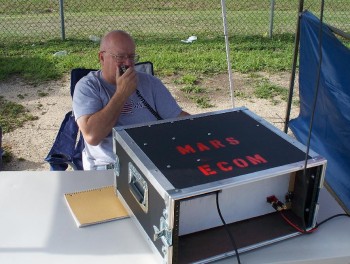 This year, the BEXAR OPERATORS GROUP (W5BOG) will be running a good – old fashioned Field Day operation at the Callaham Unit at Choke Canyon Texas State Park.