May 19

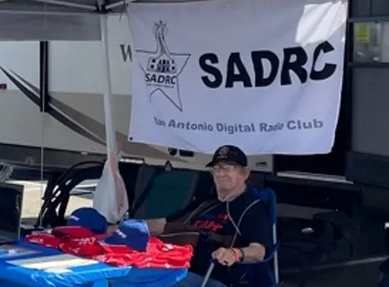
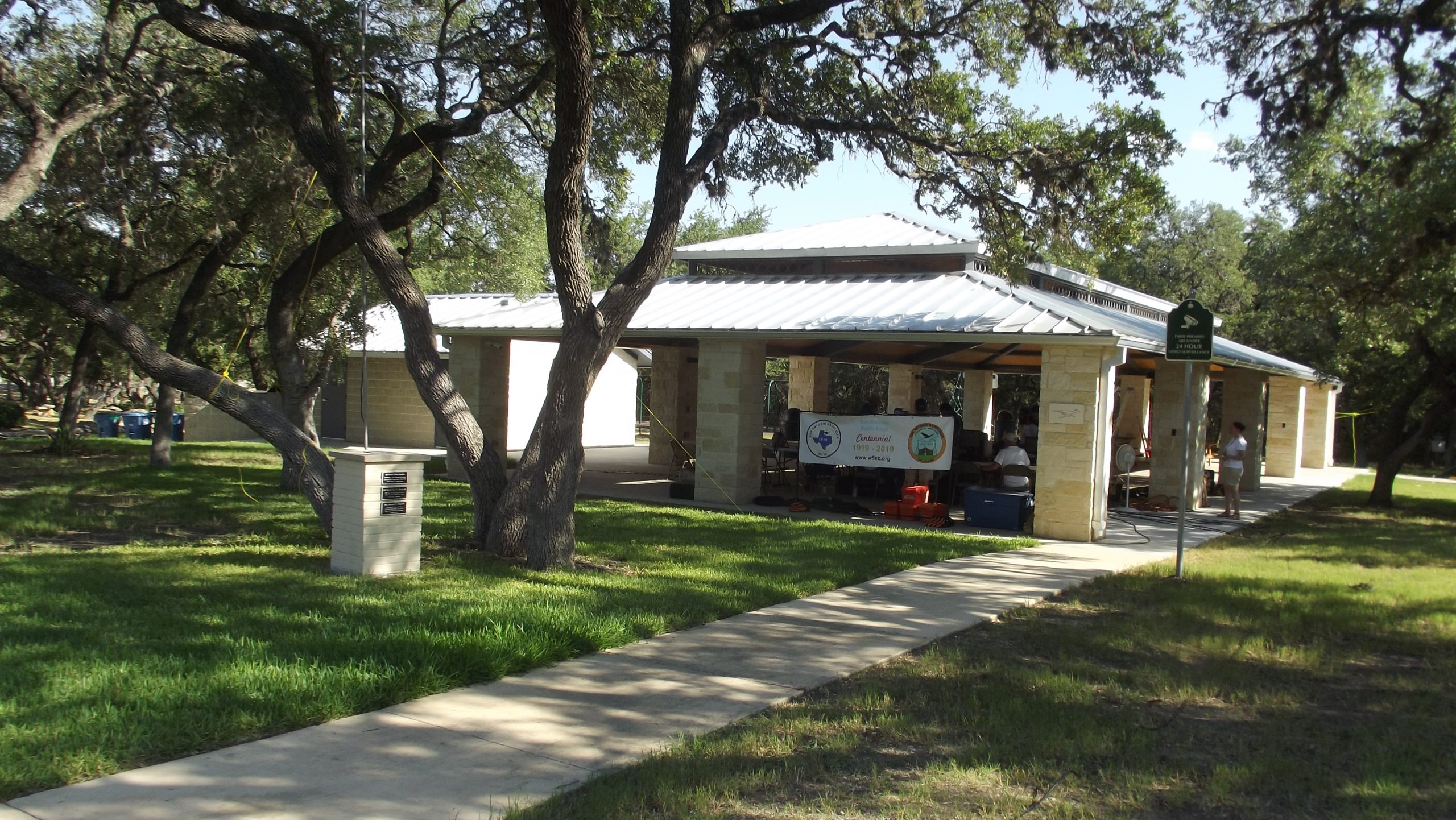
FIELD DAY IS JUNE 22-23rd 2013

I’m currently compiling a list of clubs or individual stations who are making plans for Field Day 2013.  If you want me to share your location and hours of operation (some clubs don’t run full 24 hours, and/or shut down during the night and resume in the morning), please send an email to info@sanantoniohams.org with “Field Day 2013″ in the subject line to get my attention. 

2013_Fieldday_Locations

Please include any details you want shared, such as a talk-in frequency especially if you are on private property or a hard to find location.  Let us know if there are any admission fees (such as operating from a public or private park, etc.).  If you require RSVP, please provide the official contact info for that purpose.  If you are limiting the hours of operation, such as taking a recess during the middle of the night and resuming the next morning, let me know that also.  I know you don’t just want folks to show up for meal time, especially if they aren’t a member of your club.

Other than sifting thru the thousands of emails on my computer, I also visited the ARRL official site locator page to see what I could see.  I was very disappointed, but then reminded myself that we’re still about a month away, so some clubs might not have registered their location yet.  As of the date of this article, there were only 646 registered FD sites in the USA.  Wow!

And then I looked for San Antonio / Central Texas area on the map, and said “double wow!”  I know of several clubs not shown on this map, as of today, who plan on conducting a FD event.  Click on the screen shot to the right for details.  The little red map parkers are those FD locations registered as of 05-19-2013 with ARRL.  The little yellow arrows are the locations that I’m aware of, where clubs are planning their event.

CLUBS known to be participating in Field Day in Central Texas include…

Read the rest of this entry »

Share
May 16

This will be the 3rd annual American Hero 25k Relay Run to be held in San Antonio and it will be held at a new location from previous years.

2013 Route Map American Hero 25k Relay RunWheatley Heights Sports Complex is a brand new facility on the east side of San Antonio, near Houston & IH-10. This facility is on the opposite side of IH-10 from the American Red Cross HQ (shown in picture with a red cross.)

The aftermath of the 1998 flood that caused the evacuation of the American Red Cross, was the prompt to get a $7.5million grant to build this complex, using funds from private and public sources, including tax money from the Hotel & Rental Car tax fund.  This area was devastated by the flood and all of the houses were destroyed.  The city purchased the property from the owners and relocated them out of the flood plain. There are signs near the parking lots warning about this area will be subject to flooding.

You can click on the photo on the right for a full size image of the proposed route layout.  Or click on  the WheatleyHeightsSportsComplex_Markupphoto on the left that I “borrowed” from the Wheatley Heights Sports Complex website  and added some directional arrows and markers over the actual facility.

This location is so new, less than a year or two old, that even Google Earth doesn’t have an updated areal photo showing the existence of this sports complex.

We only need a handful of hams since the route is out & back. If you want to volunteer, please contact Lee N5NTG at info@sanantoniohams.org or call 210-771-7075 (voice/text).

Share
May 14


2013-05-11 06.50.06-1Even though I always somehow seem to end up “in charge” of these types of events, I could NOT do this without all the help I get from other Ham Radio operators who “appear out of the woodwork” when I most need them.

Some of you volunteered, changed your personal plans, and showed up to help, even though you were hurting, such as Earlene Harris K5DEH who had just broken a rib a couple days before the event.  Some of you practically “demanded” that I allow you to participate!  :)

GVAR’s 147.000 repeater cooperated with us all day, with no major glitches noticed.  GVARC had a couple of hams standing by monitoring the repeater, and the event, to be sure it stayed up and running.  We never needed to switch over to either backup repeater frequency.

The weather cooperated with us and we didn’t have many areas of the route with water on them. I know of at least one road that was reported as “wet, but just puddle, not running across the road.”  I promised Paul Yura & his crew that I’d try to get some even t-shirts if they “made the bad weather go away,” so I guess I need to keep that promise. J

I’m currently accepting “after action debriefing reports” from any hams who worked the event.  Please email those reports to me at tdc@sanantoniohams.org when you get the time.  There should be a volunteer party in a few months. If that happens, I’ll put the word out and collect your RSVP’s at that time.

Read the rest of this entry »

Share
May 10

Field Day Is Just Around The Corner – Plan Now !

Field Day is coming, so here are a few thoughts as you plan your group’s operation (or if you just wish to do a Field Day operation on your own in your back yard or at a park.)

A FEW TIPS FOR ANY FIELD DAY OPERATION  – I’ve posted some of this before but I think they should be repeated. (I’ve updated them a bit for 2013)

1. When setting up antennas within close proximity to each other: If you are using wire antennas such as dipoles, and they run parallel to each other there will be interference on your HF operating bands in the form of hash so arrange them at right angles to each other and at slightly different heights. If you use wire antennas such as dipoles, try to stay away from trap dipoles and use full length antennas instead.  You may also wish to run your dipoles in different configurations such as have one as an “inverted V” and another as a sloper, etc. An antenna cut to the exact band you are using will decrease interference to and from other bands. Do not use compromise, trap or “all band” antennas. (The only efficient “all band antennas” are a log periodic and a “fan dipole” NOT a “folded dipole” or others that claim they use “balancing resistors” as this only wastes rf energy in the form of heat- some, depending on frequency will squander as much as 75% of your power.) With others you may make a few contacts, but they are junk and will cause harmonic radiation. Dedicated operating needs the right antenna. Wasted energy on trap antennas (some of your RF energy is used up in the form of heat) and that equals an inefficient radiator, especially as you go lower in frequency. On HF, if you can, do not use vertical antennas as they receive too much man-made noise from sources such as generators, etc. If you can only have one vertical mast instead of three to make a dipole, make your antenna a sloper instead. I use slopers when I do county activations as they are easy to erect and cost very little.

Read the rest of this entry »

Share
May 3

Special Olympics Spring Games

Hill Country REACT will be operating a special events station at the 2013 AREA 20 Special Olympics Spring Games. The guest operator will be W2IK, who will concentrate on 40 meters, around 7.270 MHZ from about 9AM until he poops out in the afternoon. Feel free to work this station, send a QSL card and a SASE to the QRZ address of  K5HCR, since this is the callsign he will be using.

Guest ops are welcome to join in at the operation:  Location is at the Frank Mata Stadium, 1922 S. General McMullen in the “athlete village’. If you hear us, work us and please post on the cluster!  Back in 2006, we made over 130 contacts in 4 hours. Help us break that record.

Share
Apr 8
Jean and  Ed Larose KS5V

Jean and Ed Larose KS5V

I received a text from Jean. Ed passed away this morning sometime around 3:00 a.m. She said “his pain is gone”.

Ed had been recently diagnosed at the VA Hospital with a very rare form of Stage 4 Cancer in his Bile Ducts (Gallbladder). Initially the doctors had given an estimate of 1-2 years, dropped this month to perhaps 6 months, all with proper medical treatment to extend to that date. Ed went on record to decline such treatment, saying he didn’t want to undertake expensive treatment just to prolong the pain another month of two.

Please keep the Larose family in your prayers as they say goodbye to a Husband, Father and Grandfather. Ed didn’t want a funeral service. I will keep you posted on how you may want to pay your respects.

Andrew Watson, K5NNN

Share
Apr 1

This from Jim, WB8AZP, via the ARROW mailing list:

FOR THOSE WHO CANNOT TELL THIS WAS AN APRIL FOOLS HOAX, I”M PUTTING THIS SPOILER UP FRONT!  Duh!

Buried in the middle of the 1200-page Health Care Reform package is something that should be disturbing to all US amateur radio operators. Embedded in the funding guidelines section 415, paragraph 27, line 45, are details on one of the mechanisms that the government intends to employ to help pay for the staggering costs of the new plan.

To put it simply, the new health care guidelines support the notion of creative funding from untapped resources, and from other government agencies, like the FCC.

This puts the burden on funding on other agencies, and therefore the health care reform pundits can claim that “they” didn’t introduce any new taxes to pay for everything.

Lurking in the depths of the new health carecare package is a time bomb waiting to affect all US Amateur Radio Operators; The new Talk And Pay (TAP) Tax.

What does the TAP Tax do? Well, just as it implies, it adds a tax on to each amateur license, based on usage of the bands.

The FCC knew it was going to be troublesome to enforce this kind of regulation, so they came up with a clever scheme – taxation by license class. All Technician, General, and Extra Class Licensees will be taxed at a different rate. Any holdover licenses from different classes will be taxed at the next higher rate, so novice license holders will be taxed as technicians, advanced holders as extra class licensees and so on.

The logic is that higher class licenses can use more of the frequencies; therefore they pay a larger percentage. There are even paragraphs that define taxing stations that haven’t operated, (although you have to prove that by filing a waiver), stations where the license holder has become a silent key (a different waiver), and repeater or space stations (when the license is held by a non-profit group, you can apply for a waiver as well).

The legislators have even thought of the mechanism to capture revenue from youngsters, in their special Tax On Eventual Earnings (TOE) tax. So, a youngster who is not working will pay into a TOE TAP TAX account, in the form of a debit owed to the government.

Even retirees do not escape this tax, as there is a provision for the SNAP TAP TAX (Sure Not Accounting for Productivity).

There does seem to be a provision for testing down to a previous license class, so you can get a tax break by forfeiting your current license class, (after taking a new 50 question written exam, and paying a hefty 45 dollar examination fee). You’ll be then required to sign BCKTP in CW or “slash Back Tap” in voice.

This looks to be pretty well thought out. I stopped reading after seeing the FCC amateur radio entry. It appears that Cell phones and wireless data networks will be next. There are 20 other government agencies listed in the document.

Where will this insanity end? All of this is scheduled to go into effect on April 1, 2013 because there apparently wasn’t enough time to implement it before then.

If this doesn’t negatively impact the growth of amateur radio, I don’t know what will! I think it will also promote the notion of going really underground, and not using your callsign at all, actually a practice that I’ve already heard lots of people adopt, especially on VHF.

I called my congressman after reading all of this, and he said that there are already proposals being filed to allow credit for amateur radio operators involved in public service, and he called it the Support for Individuals Desiring to Engage in Services Training, Education, and Planning (SIDESTEP). That makes me feel a little better.

I think it just might be time to get rid of my gear, before all this TOE TAP, SNAP TAP, BACK TAP, and SIDESTEP stuff goes into affect.

Once again, the government is here to help you.

Share
Mar 17

From: “Alex Garcia”
Sent: Sunday, March 17, 2013 10:33 PM
Subject: Texas Severe Weather Conference

Hello Everyone,

The Texas Severe Weather Conference, SkyWarn Training Session is coming up this Saturday at the University of the Incarnate Word.
Registration is required and is FREE. Sign up, if you haven’t
already done so, at www.texasstorms.org.

See you this Saturday.

Alex Garcia

Share
Feb 18

AB5UE called & asked me to send this out.

The Southwest Lynx Repeater System will be down for a couple of weeks for maintenance.

I don’t have any other details.

Thanks & 73s -

Mark, KE5GL
Kendall Amateur Radio Society

Share
Feb 18

Guadalupe Valley Amateur Radio Club (GVARC) is now offering the opportunity to test for your FCC Amateur Radio License through the American Radio Relay League (ARRL) Volunteer Examiner (VE) program.

When: April 6, 2013, Testing starts at 10:00 am.

Location: New Braunfels Fire Department Training Center Emergency Operations Center (1311 Industrial Dr. Suite A New Braunfels, TX 78130)

Exam Fee: $15.00 – Payable by cash or personal check

Requirements: Photo ID or 2 alternate forms of identification, plus your Social Security Number (SSN) or Federal Registration Number (FRN – Free registration on FCC.GOV website).   Note: Testing for License class upgrade also requires applicant’s ORIGINAL License or Certificate of Successful Completion and an additional photocopy of such documentation.

Morse code is not required for any Amateur Radio License

Contact: Gary S. Tangrady K5GST – Volunteer Examiner (VE) via email – K5GST01@gmail.com
or call one of the VE’s at phone – (210) 619-6217

GVARC is now sponsoring an ARRL affiliated VE Team and will conduct test sessions on a quarterly or more frequent basis as the demand for such requires.

Share

« Previous Entries